Author: Carl Park

  • I prefer Quality of life to Quantity of life.

    A few days ago, there was a gathering of five high school classmates and the mortality rate became a hot conversation topic. All of us was born in 1963.

    According to ㆍKOSIS(KOrean Statistical Information System) data, about 25% of men born in 1963 were already dead. That was a thought-provoking issue to us, who are among 75% of survivors.

    Our conversation continued for a while with the story of dead classmates, recent health conditions, illness, and exercises.

    Life Expectancy vs Healthy Life Expectancy

    There are Life Expectancy(LE) and Healthy Life Expectancy(HALE) or Health-Adjusted Life Expectancy(HALE).

    As anyone can easily infer from the two terms themselves; LE measures the total length of life, regardless of health status. And HALE adjusts LE by subtracting years lived with disease, or poor health like injury, or disability.

    In short, LE is a indicator of the QUANTITY of life, HALE is about the QUALITY of life.

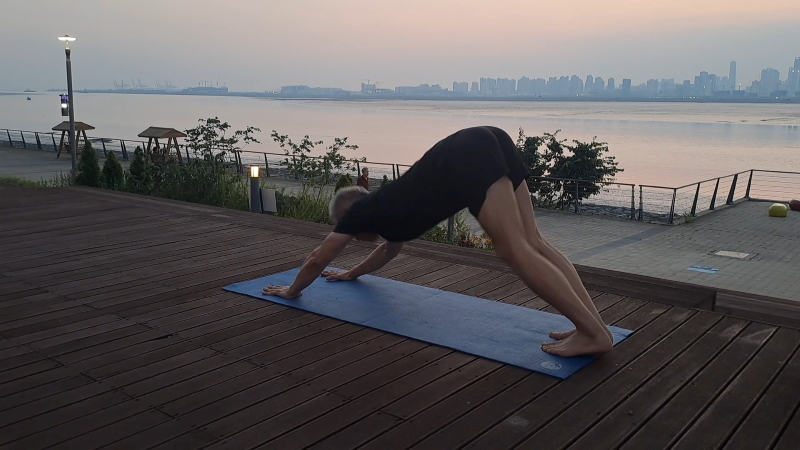
    sunset near my living place

    Based on the same source, KOSIS, my LE is about 21.4 years, whereas my HALE is about 3 to 5 years. There is a remarkable gap between the two estimates. The truth is that the gap is surprisingly wide to me.

    Compared to my peers, I tend to exercise regularly. Weight traing and yoga: 1 hour, two times per week respectively; Cardio exercise: 1 time of 2 to 4 hour every week.

    It’s main purpose is to increasse not my LE but my HALE.

    I’ve been thinking about this for a long time. The quality of life must come before the quantity of life for me. This is because I think it is a matter of human self-esteem or human dignity as an individual.

    Every sunrise has every sunset.
  • Sweating in Yoga: Can I Overcome Excessive Sweating?

    As I posted, I’m doing yoga as the only male in the yoga class. I’m sweating profusely. So, a towel is a must to wipe my sweat. But women in the class are barely glistening.

    I do weight training two days a week, one hour each. And yoga is the same. one hour, two times every week. But, much more sweat in yoga than in weight exercises.

    Why?

    I guessed my muscle can be a cause of sweating. And I do some research, and my guess was right.

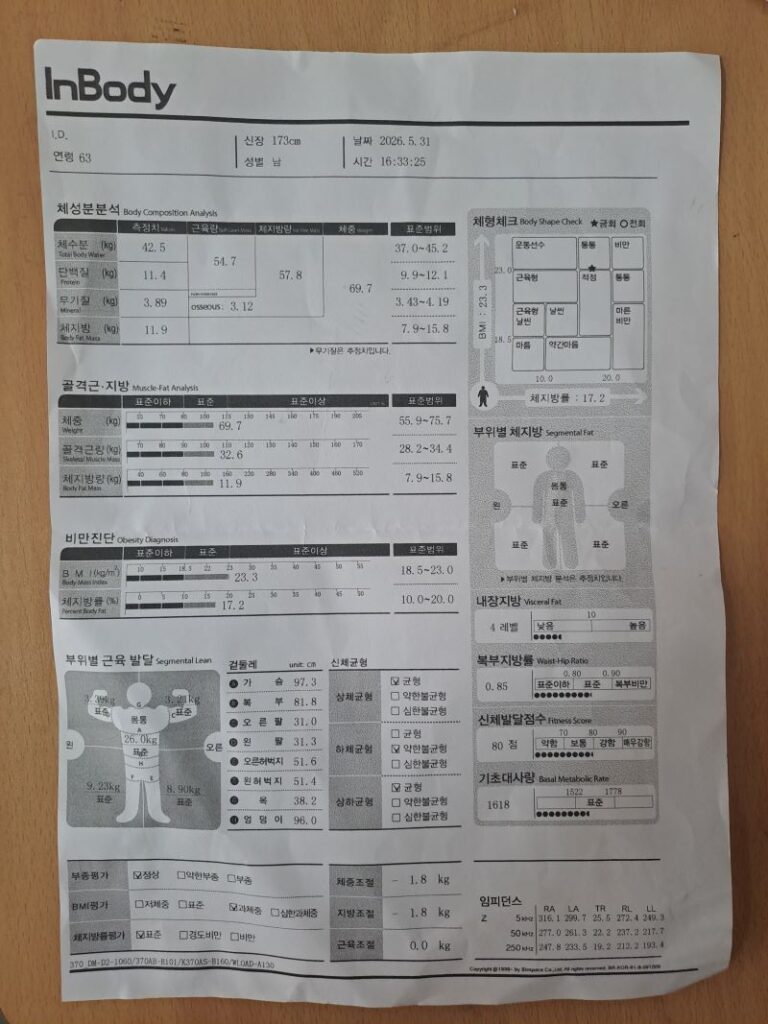
    Let’s begin with my recent InBody test report;

    Height: 173 cm(5.67 ft) Weight: 69.7 kg(153.6 lbs) Skeletal Muscle Mass: 32.6 kg(71.8 lbs) Percent Body Fat: 17.2 %

    A man doing yoga on the beach sidee.

    My body composition — having high SMM(32.6 kg) and low PBF(17.2%) — actually turns me into a highly efficient “heat-generator“ during yoga practice.

    I as in the range of “fit person” with low body fat percentages actually sweat sooner and more profusely than less-fit individuals. It’s the so-called “sweating paradox.”

    Sweating. It’s a science.

    In short, higher muscle mass, more sweat. And higher body fat, less sweat.

    And comparison of yoga and weight training with factors of time and muscle tension.

    In yoga, my muscles are in continuous isometric contraction. And almost no rest periods. It leads heat builds continuously. And, mostly holding still positions or moving slowly causes less air circulation around me. It does not allow my skin to cool me down.

    On the other hand, in weight training, there is rest time(30 seconds ~ 1 minutes) between the set/reps. My heat can dissipate during rest. And my skin can evaporate sweat efficiently with natural air circulation.

    Conclusion for me, kind of fit person:

    Sweet is natural and can not avoided.

    Just do yoga with drops of sweat.

  • Assessing My Body Composition with the first InBody test

    I took my first InBody scan 10 days ago.

    The InBody device is in the gym that I’ve been doing exercises, calisthenics, and yoga.

    Yes, I do yoga. I’m the lone male in a sea of women

    The body composition tester was there since 4 or 5 years ago when I started going to the gym.

    I ignored it for years and did the InBody test for the first time.

    InBody has its limitations

    I know that InBody scanning can be hydration-sensitive due to its BIA(Bioelectrical Impedance Analysis) mechanism, and thus a degree of inaccuracy is inevitable.

    I am an engineer with experience in developing wearable products.

    In spite of that limitations, experts say that ‘Skeletal Muscle Mass’ and ’Percent Body Fat’ are key indicators.

    Here I share my data;

    Age: 63

    Gender: Male

    Height: 173 cm(5.67 ft)

    Weight: 69.7 kg(153.6 lbs)

    Skeletal Muscle Mass: 32.6 kg(71.8 lbs)

    Percent Body Fat: 17.2 %

    With this data, AI say;

    Not bad for 60s

    Body Mass Index (BMI):

    Your BMI is roughly 23.3 kg/m². This falls beautifully inside the Healthy BMI Range of 18.5 ~ 24.9.

    Percent Body Fat (PBF):

    A PBF of 17.2% falls into the “Fitness” or lean, healthy range according to guidelines from the American College of Sports Medicine (ACSM).

    Skeletal Muscle Mass (SMM):

    Your muscle mass is strong, meaning you likely have good basal metabolic function and physical strength for your 63 years.

    In short, “Not Bad.”

    Unfortunately, this time TBW is on the report. But I cannot find a reading of ECW in ECW/TBW Ratio(Extracellular Water to Total Body Water).

    Due to old version of device?

    Googling say the proper frequency of InBody scan is 2 to 4 weeks.

    Okay, reasonable for the younger.

    But, at age of 63, I guess 3 months is suitable to me.

    Because I’m neither on a diet nor has there been a big change in my workout routine.

    I’ll see what changes come in three months.

  • Being the Only (and Oldest) guy in my yoga class; Why I Keep Going

    I’ve been doing yoga for nearly two years.

    About one year in the yoga studio near my office,

    and then in the yoga class of the resident fitness center.

    I was, and I’m still the only male among 20 to 30 yoga people.

    Some are in their 20s and 50s, but most are in their 30s to 40s, and I’m the oldest and only one in my 60s.

    The fitness center is for resident only of 2,700-unit apartment complex.

    Pretty good gym with separate yoga, and some group exercise spaces.

    A simple math, here.

    Multiply 2,700 households by 2.5 or 3 people per household.

    Total number of residents may be 6,700 to 8,100 people

    Roughly 7,400 on average.

    Then one male yogi out of 7,400.

    0.00013

    One in ten thousand.

    Reasonable?

    I wonder how it is around you.

    Only one yoga guy among 7,400

    If I do yoga only without doing other exercises regularly, I may not be able to objectively say the advantages and disadvantages of men’s yoga.

    However, I’m doing yoga together with muscle workouts (with weight exercise equipments) and calisthenics(pull-ups, dips, squats, etc.) regularly. So I can say from my personal experience what the benefits of men’s yoga are.

    I was the only yoga guy in the yoga class two years ago,

    I am still, and I’ll be for a considerable period of time to come. With a high probability.

    Nevertheless, I’ll will continue to do yoga as long as my musculoskeletal system allows.

    And I’d like to recommend yoga to men from my two years of yoga practicing.

    Especially for men after middle age.

    I strongly recommend that it’s worth trying.

    Give it a shot.

  • About me

    Staying active, Learning daily.

    Hello and welcome to my personal blog.

    As the domain name “BornIn1963.com” says intuitively, I was born in 1963 and live in South Korea.

    Starting a blog in English, as a non-native English speaker, is kind of a challenge for me. While English is not my native tongue, I wanted to create a space where I could connect with people globally.

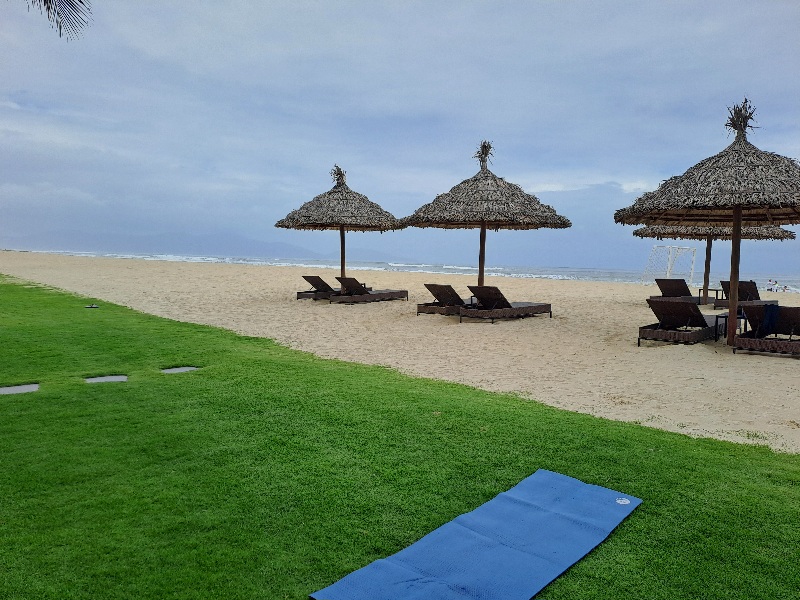
    Yoga on the beach of Danang, Vietnam. March of 2026

    I’m a newbie to WordPress, so I couldn’t find a way to do captioning to a picture. I enjoyed yoga retreat in Danang, Vietnam. March, 2026.

    On this blog, I’d like to post my greatest passions:

    1. Physical Fitness: Sharing my routines and progress in calisthenics (pull-ups), yoga, and weight exercises.
    2. Continuous Learning: Tracking my journey of mastering English, Japanese, and French, while also sharing resources on Korean language and culture for global readers.
    3. Some Hobbies: Capturing moments from my travels, hiking trips, bicycle rides, and finger-style guitar sessions.
    4. And last but not least: Getting old naturally, health issues, etc.

    People say age is just a number. Just a number. Truly? Seriously?

    I think it’s half right and half wrong.
    I will write down the reason why I think so in the coming posts. Thank you for joining me on this adventure!

  • Stuck at 11 pull-ups for nearly a year

    Have you ever been stuck at a certain number(reps) of exercises?

    For examples, squats, push-ups, pull-ups.

    In July last year, I hit my maximum record of 11 pull-ups for my life after 50.

    Since then, my numbers haven’t increased at all.

    It can be called as ‘a pull-up plateau’ like ‘a weight-loss plateau.’

    It’s been almost a year, and there hasn’t been any significant change in my weight; I have been maintaining 69 to 70 kg (152 to 154 lbs).

    My workout routine has also stayed about the same.

    1 hour of weight exercise in two days every week.

    So, what’s the problem?

    The answer might simply be that I am getting a little older every day. Actually every hour, every minute, every second.

    Occasionally, when I feel in great physical condition, I barely manage to do 12 pull-ups. Yes, literally ‘barely’.

    However, my personal standard is being able to do 12 clean pull-ups three days in a row or every other day.

    Therefore, I am currently not meeting my own standard.

    My goal is to ‘comfortably’ do ‘clean’ 12 pull-ups by the end of 2026.

    Hopefully, I can make it happen!