Tag: InBody

  • Sweating in Yoga: Can I Overcome Excessive Sweating?

    As I posted, I’m doing yoga as the only male in the yoga class. I’m sweating profusely. So, a towel is a must to wipe my sweat. But women in the class are barely glistening.

    I do weight training two days a week, one hour each. And yoga is the same. one hour, two times every week. But, much more sweat in yoga than in weight exercises.

    Why?

    I guessed my muscle can be a cause of sweating. And I do some research, and my guess was right.

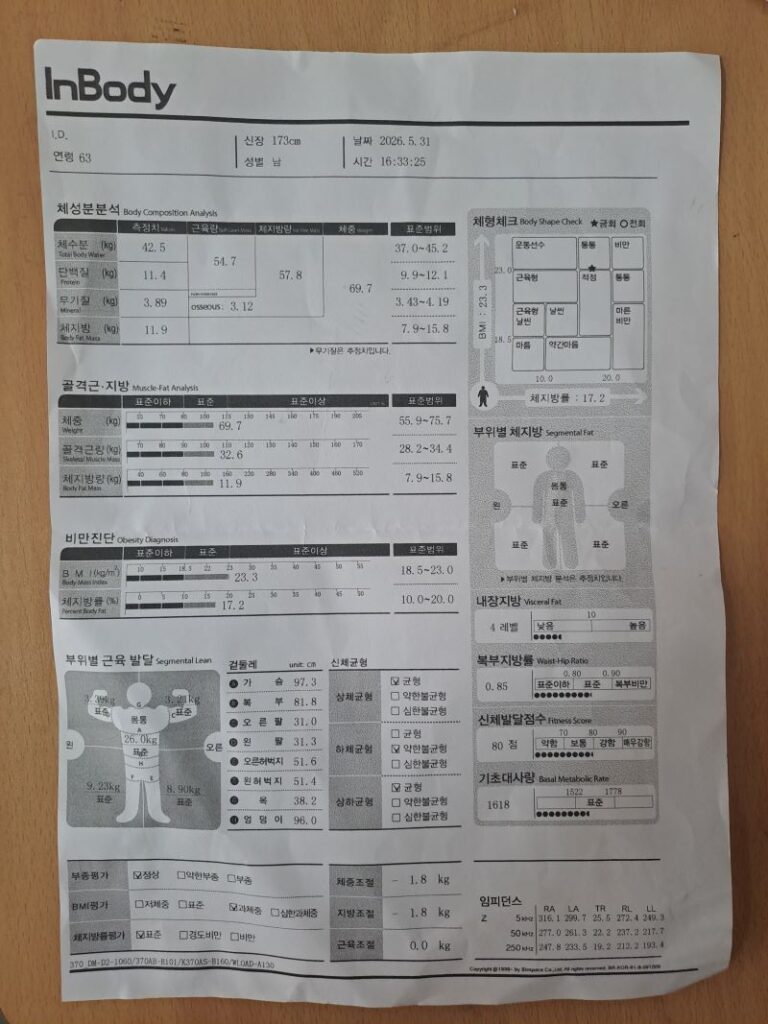
    Let’s begin with my recent InBody test report;

    Height: 173 cm(5.67 ft) Weight: 69.7 kg(153.6 lbs) Skeletal Muscle Mass: 32.6 kg(71.8 lbs) Percent Body Fat: 17.2 %
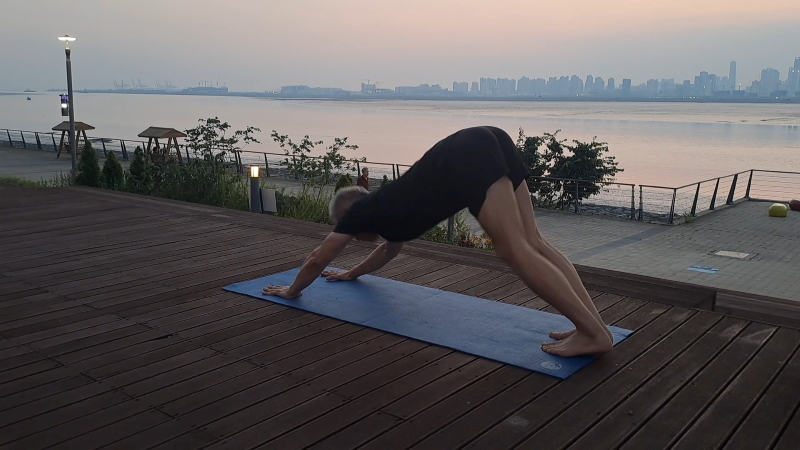
    A man doing yoga on the beach sidee.

    My body composition — having high SMM(32.6 kg) and low PBF(17.2%) — actually turns me into a highly efficient “heat-generator“ during yoga practice.

    I as in the range of “fit person” with low body fat percentages actually sweat sooner and more profusely than less-fit individuals. It’s the so-called “sweating paradox.”

    Sweating. It’s a science.

    In short, higher muscle mass, more sweat. And higher body fat, less sweat.

    And comparison of yoga and weight training with factors of time and muscle tension.

    In yoga, my muscles are in continuous isometric contraction. And almost no rest periods. It leads heat builds continuously. And, mostly holding still positions or moving slowly causes less air circulation around me. It does not allow my skin to cool me down.

    On the other hand, in weight training, there is rest time(30 seconds ~ 1 minutes) between the set/reps. My heat can dissipate during rest. And my skin can evaporate sweat efficiently with natural air circulation.

    Conclusion for me, kind of fit person:

    Sweet is natural and can not avoided.

    Just do yoga with drops of sweat.
  • Assessing My Body Composition with the first InBody test

    I took my first InBody scan 10 days ago.

    The InBody device is in the gym that I’ve been doing exercises, calisthenics, and yoga.

    Yes, I do yoga. I’m the lone male in a sea of women

    The body composition tester was there since 4 or 5 years ago when I started going to the gym.

    I ignored it for years and did the InBody test for the first time.

    InBody has its limitations

    I know that InBody scanning can be hydration-sensitive due to its BIA(Bioelectrical Impedance Analysis) mechanism, and thus a degree of inaccuracy is inevitable.

    I am an engineer with experience in developing wearable products.

    In spite of that limitations, experts say that ‘Skeletal Muscle Mass’ and ’Percent Body Fat’ are key indicators.

    Here I share my data;

    Age: 63

    Gender: Male

    Height: 173 cm(5.67 ft)

    Weight: 69.7 kg(153.6 lbs)

    Skeletal Muscle Mass: 32.6 kg(71.8 lbs)

    Percent Body Fat: 17.2 %

    With this data, AI say;

    Not bad for 60s

    Body Mass Index (BMI):

    Your BMI is roughly 23.3 kg/m². This falls beautifully inside the Healthy BMI Range of 18.5 ~ 24.9.

    Percent Body Fat (PBF):

    A PBF of 17.2% falls into the “Fitness” or lean, healthy range according to guidelines from the American College of Sports Medicine (ACSM).

    Skeletal Muscle Mass (SMM):

    Your muscle mass is strong, meaning you likely have good basal metabolic function and physical strength for your 63 years.

    In short, “Not Bad.”

    Unfortunately, this time TBW is on the report. But I cannot find a reading of ECW in ECW/TBW Ratio(Extracellular Water to Total Body Water).

    Due to old version of device?

    Googling say the proper frequency of InBody scan is 2 to 4 weeks.

    Okay, reasonable for the younger.

    But, at age of 63, I guess 3 months is suitable to me.

    Because I’m neither on a diet nor has there been a big change in my workout routine.

    I’ll see what changes come in three months.